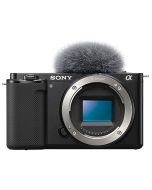


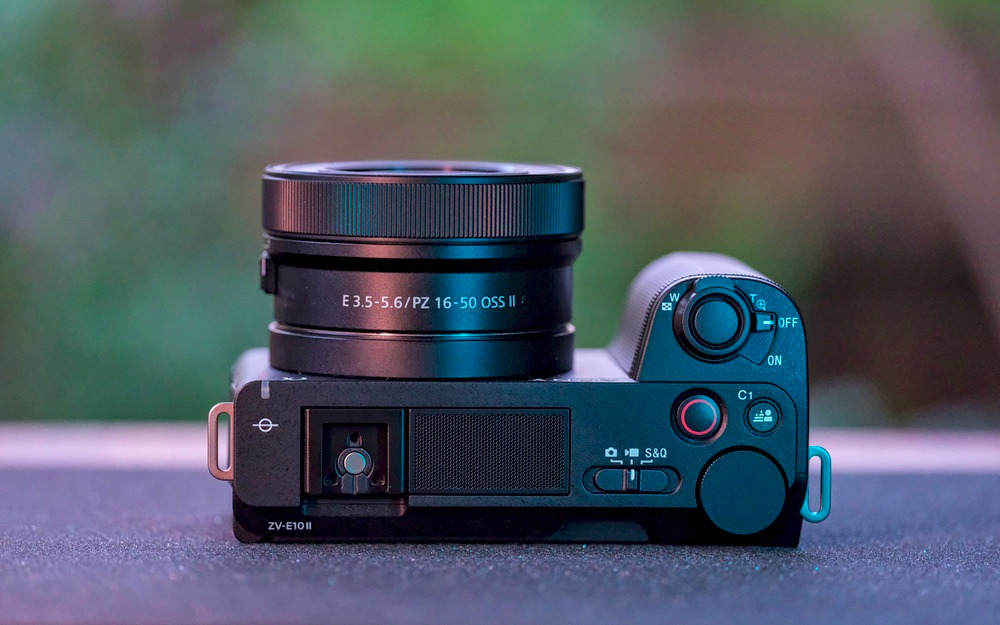
Sony's ZV-E10 was one of the most popular vlogging cameras we've stocked at Primes & Zooms; affordable, compact, E-mount, and purpose-built for content creation. The ZV-E10 II takes everything that worked and fixes almost everything that didn't. It's now available to rent from us in Pune as well as in Mumbai.
Here's a thorough look at what this camera is, what changed from the original, who it's built for, and, just as importantly, who should probably avoid it.
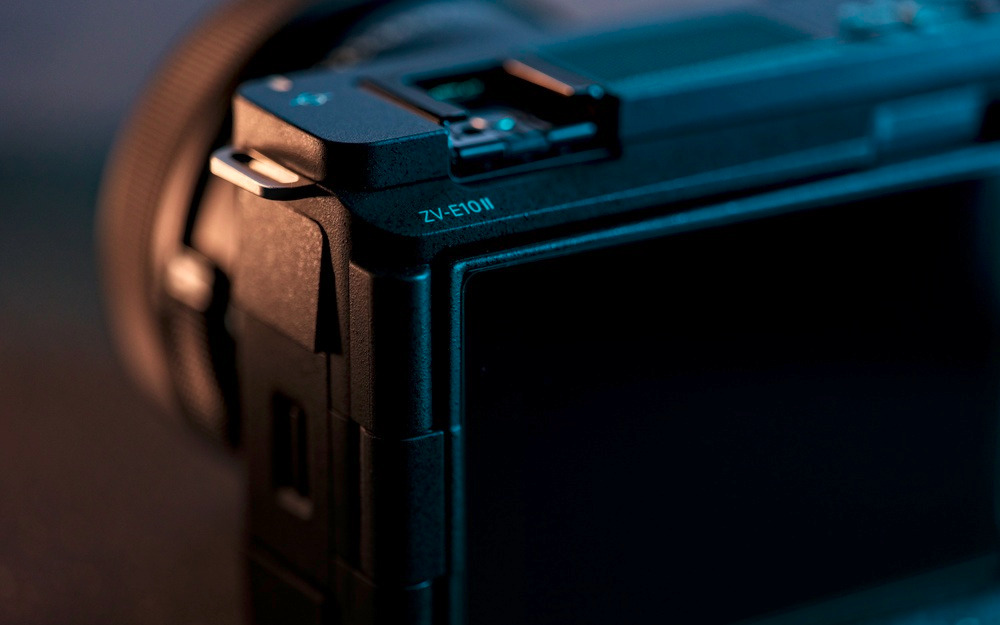
Key Specifications
| Specification | Sony ZV-E10 II |
|---|---|
| Sensor | 26MP APS-C BSI Exmor R CMOS (23.5 × 15.6mm) |
| Processor | BIONZ XR |
| Lens Mount | Sony E-mount (full E-mount lens compatibility) |
| Autofocus | 759-point phase-detection, Real-Time Tracking, Eye/Face/Animal AF |
| Max Video | 4K/60p 10-bit 4:2:2 (XAVC HS / XAVC S); up to 200Mbps |
| Slow Motion | 1080p/120fps |
| Log / Colour Science | S-Log3, S-Cinetone, Cinematic Vlog mode; supports up to 16 custom LUTs |
| Stabilisation | Electronic (Active Mode); no IBIS |
| ISO Range | 100–32,000 (expanded: 50–102,400) |
| Continuous Shooting | 11fps (electronic shutter) |
| Shutter | Electronic only; 1/8000s – 30s (no mechanical shutter) |
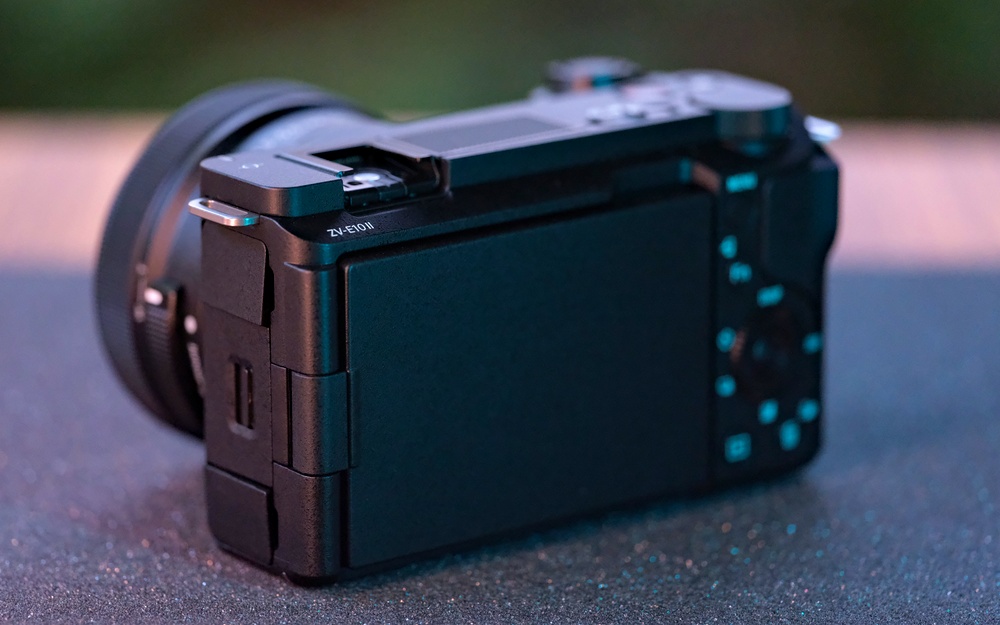
| Display | 3-inch fully articulating touchscreen, 1.037M dots; portrait/vertical mode |
| Viewfinder | None |
| Microphone | Built-in 3-capsule directional mic; 3.5mm mic input; headphone output |
| Battery | NP-FZ100 — approx. 610 shots / ~195 minutes continuous 4K recording |
| Memory Card | Single slot, SDXC UHS-II |
| Connectivity | USB-C (3.2), Micro HDMI, Wi-Fi, Bluetooth; Creators' App compatible |
| Weather Sealing | None |
| Dimensions | 114.8 × 67.5 × 54.2mm |
| Weight (with battery) | 377g |
| Colours Available | Black, White |
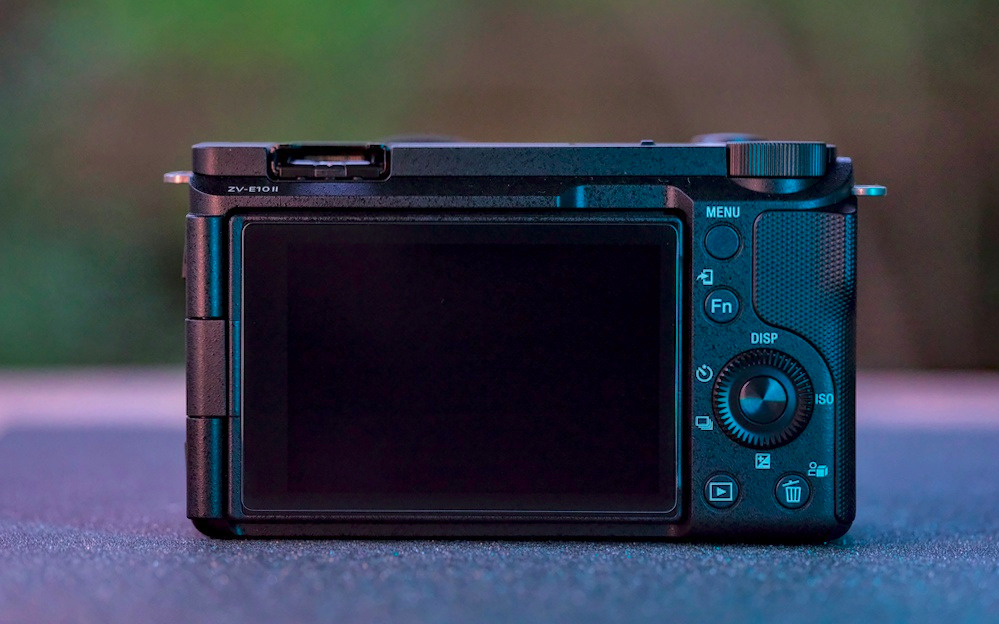
What's New vs. the Original ZV-E10
The original ZV-E10 was released in 2021 and was built on Sony's then-aging a6400 sensor platform. By the time its successor arrived in mid-2024, the gaps were hard to ignore. The ZV-E10 II addresses them directly.
| Feature | ZV-E10 (Original) | ZV-E10 II |
|---|---|---|
| Sensor | 24MP APS-C (a6400-era) | 26MP BSI Exmor R (same as a6700 / FX30) |
| Processor | BIONZ X | BIONZ XR |
| 4K Video | 4K/30p with crop; no 4K/60p | 4K/60p from full sensor width (oversampled from 6K) |
| Colour Depth | 8-bit only | 10-bit 4:2:2 internal |
| Log / LUT support | None | S-Log3, S-Cinetone, Cinematic Vlog, 16 custom LUTs |
| Autofocus Points | 425 phase-detection | 759 phase-detection (~92% frame coverage) |
| Subject Tracking | Basic face/eye tracking | Real-Time Tracking — eyes, faces, animals, birds |
| Battery | NP-FW50 (~40 min video) | NP-FZ100 (~195 min video; approx. double the life) |
| Rolling Shutter | Significant at 4K/30p | Reduced by ~35% due to faster sensor readout |
| Menu System | Older Sony UI | Redesigned — logical layout, real-time graphical feedback |
| Memory Card | UHS-I only | UHS-II supported |
| Vertical Shooting | No native portrait mode | LCD rotates for vertical; tally light included |
| Weight | 343g (with battery) | 377g — slightly heavier due to larger battery |
| Viewfinder | None | Still none |
| Weather Sealing | None | Still none |
In short: the sensor, processor, video codec, autofocus, battery, and menu system are all meaningfully better. The body size and the absence of a viewfinder and weather sealing remain unchanged.
Who This Camera Is Perfect For
YouTube and Social Media Content Creators
This is the camera the ZV-E10 was trying to be. 4K/60p at 10-bit 4:2:2, S-Log3, Cinematic Vlog mode, and support for 16 custom LUTs means you can deliver genuinely cinematic-looking video from a body that fits in a small bag. The dedicated product showcase, background defocus, and S&Q buttons are all carried over from the original — physical shortcuts for the things content creators actually use constantly.
Solo Creators Who Shoot Themselves
The fully articulating LCD with native portrait/vertical orientation, a built-in tally light (a red border that tells you recording is active), and Sony's Real-Time Eye AF make this a camera you can genuinely operate alone, pointed at yourself, without a monitor or an assistant. The three-capsule directional mic picks up sound from in front of the camera while rejecting ambient noise from the sides — useful for vlogging in noisy environments.
Travel Videographers and Vloggers
At 377g with the battery, the ZV-E10 II is easy to carry across a full day. It uses the Sony E-mount, which gives you access to a wide range of compact prime and zoom lenses. Paired with the 16-50mm PZ kit lens, the whole setup is genuinely pocket-sized. The NP-FZ100 battery lasts close to two hours of continuous 4K recording — enough to get through most shoots without a swap.
Photographers Upgrading from a Smartphone or Point-and-Shoot
The ZV-E10 II doesn't require deep camera knowledge to use well. The menu redesign is the clearest Sony has managed in an APS-C body, and computational features like face priority auto-exposure and skin-tone softening are enabled by default. The 26MP sensor produces detailed stills with good colour science, and the Real-Time Tracking AF is forgiving. If you're stepping up from a phone camera for the first time, this is a capable but manageable camera to learn on.
Videographers Who Want Pro Colour Science Without the FX30 Price
The ZV-E10 II shares its sensor and processor with the FX30 — Sony's Cinema Line video-first body. That means the same S-Cinetone colour profile, S-Log3 dynamic range, and 10-bit 4:2:2 internal recording, at a considerably lower rental cost. If you want to colour grade your footage seriously, this camera has the raw material to support it.
Who This Camera Is Not For
✕ Sports, Wildlife, and Fast Action Photographers
- 11fps burst with an electronic-only shutter means rolling shutter can affect fast horizontal motion.
- No mechanical shutter is a real limitation for action stills.
- No IBIS means long-lens handheld shooting is harder to stabilise.
- At this price point, the Sony a6700 is a significantly better choice for action — it adds IBIS and faster processing.
✕ Photographers Who Need a Viewfinder
- There is no electronic viewfinder — not even an optional hot-shoe EVF port. In bright outdoor conditions, the LCD can be difficult to see clearly.
- This is a deal-breaker for some photographers who rely on eye-level composition, especially in sunlight.
✕ Shooters Who Need Weather Sealing
- No weather sealing of any kind. In monsoon conditions, or any situation with rain, dust, or sand, this camera needs protection — a rain cover at minimum.
- If weather resistance matters to you, consider the Sony a6700 or a Nikon Z50 II instead.
✕ Long 4K/60p Recording Sessions
- The ZV-E10 II may overheat after approximately 24 minutes of continuous 4K/60p recording. For short-form content this rarely matters, but for long interview setups or event coverage at high frame rates, this is a practical constraint.
- 4K/30p runs significantly longer without the same heat issue.
✕ Those Who Need Optical Stabilisation in the Body
- The ZV-E10 II has electronic stabilisation only (Active Mode). Active Mode applies a crop to the image, and in very shaky conditions or at longer focal lengths, it isn't sufficient without a gimbal.
- If you're shooting handheld with longer lenses and need smooth footage, budget for a gimbal alongside the camera rental.
Rent the Sony ZV-E10 II at Primes & Zooms
The Sony ZV-E10 II is available to rent from us, with delivery available across Pune and Mumbai. It can be rented on its own or paired with lenses, a gimbal, an external microphone, or other accessories — get in touch if you'd like help putting together a kit for your shoot.
Sony ZV-E10 II — Rental Rates
- 1 DayRs 800
- 2 DaysRs 1500
- 5 DaysRs 3500
- 9+ DaysRs 650/day
Pair it with:
- Sony E-mount lenses — wide angle through telephoto, primes and zooms
- — recommended if you're shooting handheld video without a stabilised lens
- — the built-in 3-capsule mic is good; a shotgun or lapel mic will be better for interviews or noisy environments